July 2025 Newsletter
Planting What’s Next: Sector Readiness in an Era of Wildfire and Growth
As we reach the midpoint of 2025, it's impossible to ignore the challenges wildfires continue to pose across Canada. Millions of hectares of forest have been lost, and communities are feeling the weight of environmental, economic, and ecological uncertainty. Yet, within this crisis lies a profound responsibility, and a unique opportunity for our sector.
CTNA-ACPF members are stepping up as essential partners in forest recovery. With over 5.3 billion seedlings needed to restore just a fraction of what’s been lost from just the 2023 and 2024 fires, Canada’s nurseries are no longer operating behind the scenes. We are on the front lines of climate adaptation, biodiversity renewal, and community resilience.
Over the past few months, our sector has gained national attention. Our Economic Analysis Report is shaping conversations in government and the media, while our members continue innovating and expanding production, adopting new technologies, and preparing the next generation of skilled workers through the Forest Nursery Training Program.
We are proud of how far we've come in such a short time. But even more, we’re inspired by the path ahead.
Thank you for your commitment to growing not just seedlings—but a climate-resilient future for Canada’s forests.
Mike Downing
President, CTNA–ACPF
Wildfire Season Update
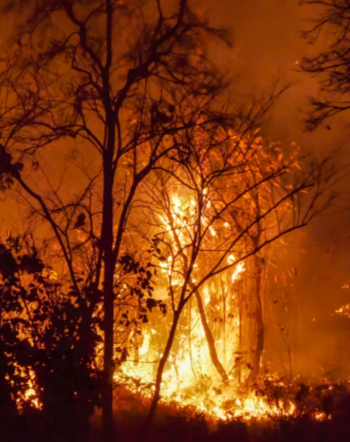
As wildfires continue to intensify across Canada, 2025 is already shaping up to be another devastating year for our forests. With over 3.7 million hectares burned as of early June and hundreds of fires still active, the scale of this year’s damage is adding to the already staggering backlog of reforestation needs.
These fires haven’t just affected trees, they’ve displaced communities, impacted wildlife, and sent plumes of smoke across the continent, with air quality alerts in nearly every province.
In 2023 and 2024 alone, wildfires scorched over 17 million hectares, making it the most destructive fire period in Canadian history. If we were to restore just 15% of those forests, we would need an estimated 5.3 billion seedlings. This is a volume that far exceeds current national nursery production. In provinces like Saskatchewan, restoring even a small fraction of the newly burned land would require hundreds of millions of seedlings, well beyond the current output.
2025 represents a tipping point. The cumulative effects of back-to-back fire seasons are testing the limits of our restoration infrastructure and demand a coordinated, forward-looking response.
As noted in our recent Ashes to Action op-ed: “We pour billions into suppression but not nearly enough into regrowth.” Forests take decades to return, and without immediate action, many fire-affected landscapes may never fully recover.
This crisis has placed renewed focus on the need to scale up nursery production, cultivate a skilled workforce, and secure long-term seed supply. CTNA–ACPF is calling for a national strategy to restore burned forests starting with long term commitments from all governments to ensure all components of the forest restoration supply chain can respond to increased demands.
We’re working with members, governments, and partners to elevate the urgency of this issue and ensure that nurseries are recognized as essential climate infrastructure. The road to recovery begins with seeds, seedlings, and the people who grow them.
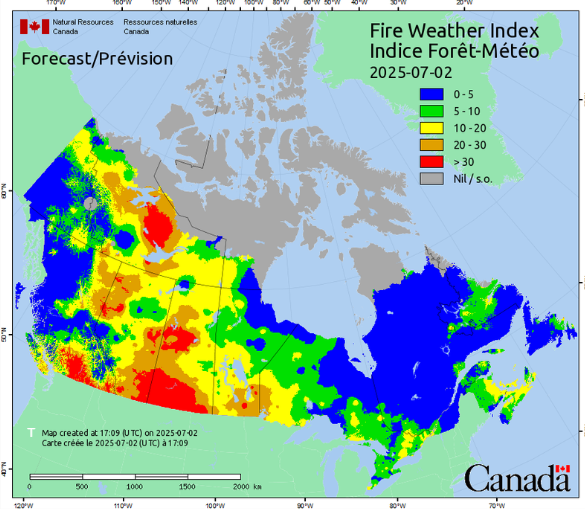
The Fire Weather Index is a component of the Canadian Forest Fire Weather Index (FWI) System. It is a numeric rating of fire intensity
Economic Analysis of Canada’s Tree Nurseries
In late January, CTNA–ACPF released the first-ever national economic analysis of the Canadian tree seedling sector. The report confirmed what many in the industry already knew: forest nurseries are critical to Canada’s climate goals, rural employment, and long-term forest health.
Key Findings:
Restoring just 15% of forests burned in 2023–2024 would require 5.3 billion seedlings
Producing and planting those seedlings would create an estimated 31,000 full-time jobs
The effort would contribute over $3.9 billion to Canada’s GDP
These numbers quickly gained traction, with media outlets across the country covering the report, including:
Business in Vancouver
Victoria Times Colonist
North Shore News
Merritt Herald
Pique Newsmagazine
Tree Frog News
Municipal Information Network
To amplify the findings and support policy dialogue, CTNA–ACPF issued a coordinated mailout to provincial forestry ministers in February.
The package included:
A tailored cover letter outlining reforestation potential
A copy of the Economic Analysis Report
A call to action for strategic investment and long-term commitment to forest restoration infrastructure
This targeted outreach supports our broader goal of elevating the visibility of the nursery sector among decision-makers, especially as wildfire risk and restoration demands continue to grow.
As we continue building momentum, the Economic Analysis remains a foundational tool in our advocacy, outreach, and partnership development.
If you haven’t already, we encourage you to download the full report or share it with your local elected officials and networks.
Conference Highlights
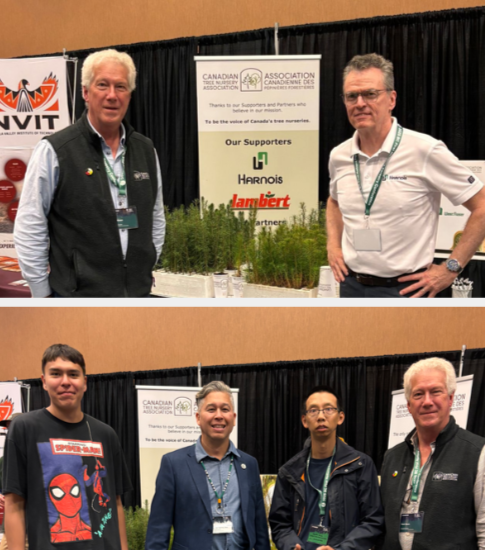
Over the past few months, CTNA–ACPF has participated in key conferences and community events that have helped strengthen national conversations around seedling production, wildfire recovery, and Indigenous-led restoration. At the 2025 First Nations Forest Council Conference in Penticton, we connected with Indigenous forestry professionals, youth, and industry leaders to discuss forest stewardship, workforce development, and the role nurseries play in supporting community-based restoration initiatives. It was also an opportunity to spark interest in nursery careers among youth.
Earlier in the year, CTNA–ACPF presented at Office des producteurs de plants forestiers (OPPFQ) Annual Conference in Quebec City, where discussions focused on the urgent need to expand seedling production in response to climate-driven restoration demands. In Bracebridge, we joined the Muskoka Community Group to engage with landowners and conservation advocates about the importance of biodiversity, native species, and localized seedling supply. Each of these events has underscored how closely aligned community and sector goals are and how vital nurseries are in delivering on the promise of forest recovery.
Upcoming Conferences
CTNA–ACPF is excited to continue engaging with partners, growers, researchers, and policymakers at several major events this summer and fall. These conferences provide valuable opportunities to showcase the role of nurseries in forest restoration, strengthen cross-sector collaboration, and advance conversations around innovation, workforce development, and seed supply.
We’ll be participating in the following upcoming events:
Canadian Forest Genetics Association (CFGA)/ Forest Gene Conservation Association (FGCA) Conference
August 11–15, 2025 – Ottawa, ON
CTNA–ACPF will co-host a full-day pre-conference workshop focused on seed systems, nursery capacity, and the future of forest restoration. We’ll also hold our Annual General Meeting during the conference on August 11—we hope to see many of you there!
Forest Nursery Association of BC (FNABC) Conference
September 23–25, 2025 – British Columbia
This will be a key opportunity to reconnect with western growers and industry leaders to discuss regional priorities, production challenges, and innovations in nursery infrastructure and technology.
We look forward to seeing members at these events and continuing to champion the essential role of nurseries in building climate-resilient forests.
Forest Nursery Training Program
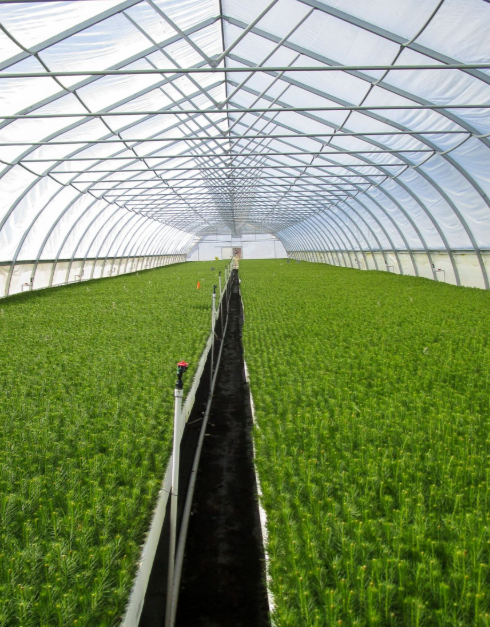
With funding assistance from the federal government’s 2 Billion Tree Capacity Grant Program, CTNA-ACPF has launched an important project to address the growing demand for skilled nursery workers in Canada. This initiative will play a key role in equipping the next generation of workers for the critical tasks of seedling production and forest restoration.
The main goals of this project include:
Understand Training Needs: Generate a detailed understanding of the core training requirements needed to meet the current and future needs of the nursery sector.
Develop Curriculum & Training Programs: Design a comprehensive training structure that will effectively recruit and train both new and existing nursery workers to meet these demands.
Thanks to the help of the Task Team, we have advanced the FNTP business plan and are currently refining the delivery model, which is being shaped in close collaboration with nursery partners, training institutions, and industry leaders across the country. Input from our Task Team continues to guide the program's development. Their insights have been critical in identifying curriculum priorities, mentorship opportunities, and regional considerations to ensure the training reflects real-world operations across Canada's diverse nursery landscape.
The FNTP will be paired with online or in-person instruction with a structured co-op placement at a participating nursery. This model allows trainees to build foundational knowledge through targeted course modules then apply those skills in a real-world nursery setting.
It’s a flexible, accessible format designed to meet learners where they are, while directly serving the practical needs of nurseries.
We’re currently working with education partners and nursery leaders to compile a core course list that reflects the essential competencies needed to become a successful forest nursery grower. Topics will include:
Seed sowing and transplanting
Greenhouse and irrigation management
Pest and disease control
Substrate and media handling
Seedling quality monitoring
Workplace safety and seasonal planning
To ensure consistency and credibility, graduates from similar programs offered by participating institutions will receive a recognized stamp of alignment with the FNTP core competencies. This endorsement will serve as a signal to employers that the trainee has developed the essential knowledge and skills needed to succeed in a nursery environment whether through the FNTP directly or through a comparable pathway.
Once finalized, CTNA–ACPF will coordinate with nurseries to organize local co-op placements for each trainee ensuring hands-on experience and a seamless transition from learning to working. Nurseries across Canada have expressed strong interest in hosting students, mentoring new workers, and helping shape the future workforce.
To complement the program, CTNA–ACPF is also developing a dedicated job board and launching targeted outreach campaigns to raise awareness about career paths in the nursery sector.
FNTP Task Team Members
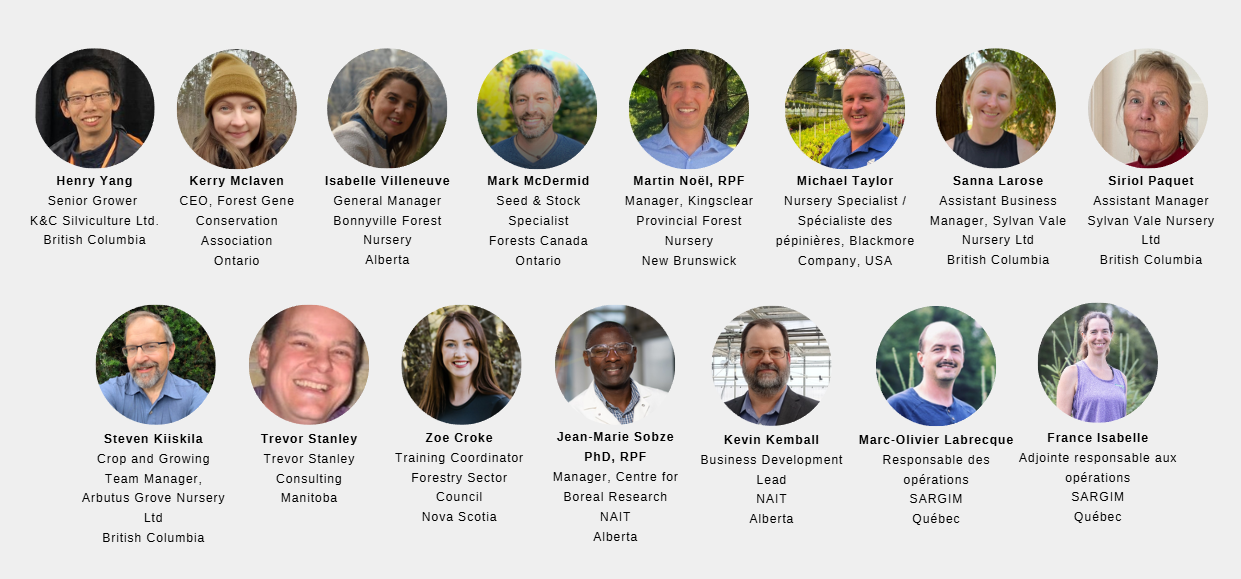
To aid in the FNTP, CTNA-ACPF would like to welcome our task team members who will provide valuable insight, guidance, and advice throughout all stages of the FNTP. This team will play an essential role in informing key decisions and ensuring the project’s success. The Task Team is composed of experts with extensive experience in nursery operations across all levels, ensuring the program is grounded in practical, hands-on skills. The team includes professionals with deep knowledge in forest management and related fields, providing essential context for nursery operations within the larger framework of forest restoration and environmental sustainability.
Membership Spotlight
Across the country, nurseries are leading the way in forest restoration and testing new approaches, training the next generation, and delivering the seedlings that make reforestation possible. Our Membership Spotlight section is dedicated to sharing these stories. Whether you're trialing new techniques, expanding your operations, or welcoming new staff, your work deserves to be recognized and celebrated by the national nursery community.
We invite all members to contribute to future editions of the newsletter. Have a project update, innovation, or seasonal success to share? We’d love to hear from you. Your insights not only inspire others, they help strengthen our collective voice.
Please email any updates, stories, or successes to kfoley@ctna-acpf.ca to be featured in the next newsletter.
Somerville Seedlings Inc.
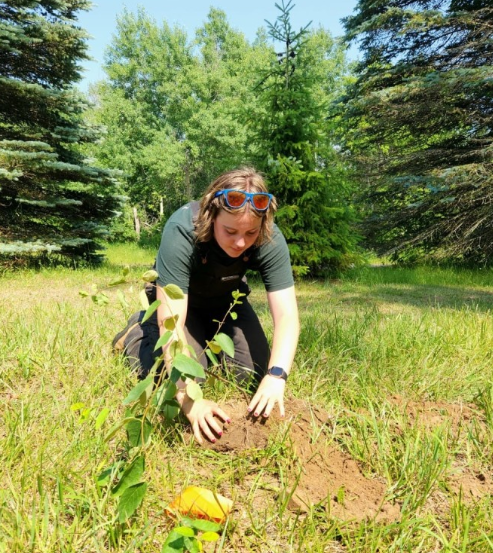
Meet Eden, a summer student at Somerville Seedlings, a native tree nursery based in Everett, Ontario. This spring, the Somerville team wrapped up a productive lifting season harvesting seedlings both for internal use and for a wide range of customers, including conservation authorities and private landowners. With lifting complete in May, they quickly transitioned into transplanting and seeding, both of which are nearing completion as the summer season begins.
One of Eden’s key contributions has been supporting nursery communications, helping share operational highlights and innovations with the wider community. A particularly exciting project this year has been an experiment with Kentucky Coffee Tree (Gymnocladus dioicus) seed stratification. As demand for this unique species grows, Somerville is exploring ways to improve germination efficiency at scale.
To test viability, Eden and the team trialed a hot water scarification method—soaking the seeds for 24 hours with periodic heat application to crack the hard seed coat and initiate germination. Seeds were then hand-planted using marked planting sticks for precision spacing. The team is closely monitoring the results, which range from hard and unchanged seeds to fully split and successfully softened ones. Germination tests will continue this summer to determine which method produces the most consistent and cost-effective outcomes.
With a strong spring season behind them and promising experiments underway, Somerville Seedlings is showcasing the blend of tradition, innovation, and hands-on learning that continues to define the nursery sector in Canada.
Kingsclear Tree Nursery
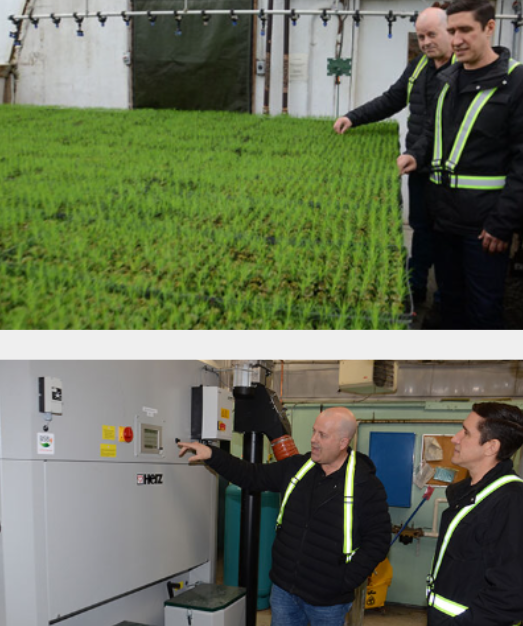
ocated near Fredericton, New Brunswick, Kingsclear Nursery continues to lead in both production capacity and sustainability. With eight growing complexes and 85 greenhouses, the nursery produces over 19 million seedlings annually for reforestation across Crown lands and private woodlots.
This year, Kingsclear took a major step toward decarbonizing its operations by installing three Herz Firematic 350 wood-pellet boilers, replacing aging oil-fired systems. Completed in early 2025 with support from Biomass Solutions Biomasse (BSB) and New Brunswick’s Climate Change Action Plan, the upgrade proved immediately effective. During one of the coldest Februarys on record, when temperatures dipped below –25 °C, the new biomass system kept greenhouse conditions stable at 23 °C—enabling the successful seeding of nearly 3 million seedlings.
Kingsclear is also constructing a new 110,000 ft² greenhouse that will be entirely heated with pellet systems, further increasing their production capacity while reducing their carbon footprint. By shifting from fossil fuels to low-carbon wood pellets—sourced from leftover sawdust and forestry by-products—Kingsclear is closing the loop in sustainable forestry while enhancing energy efficiency and operational resilience.